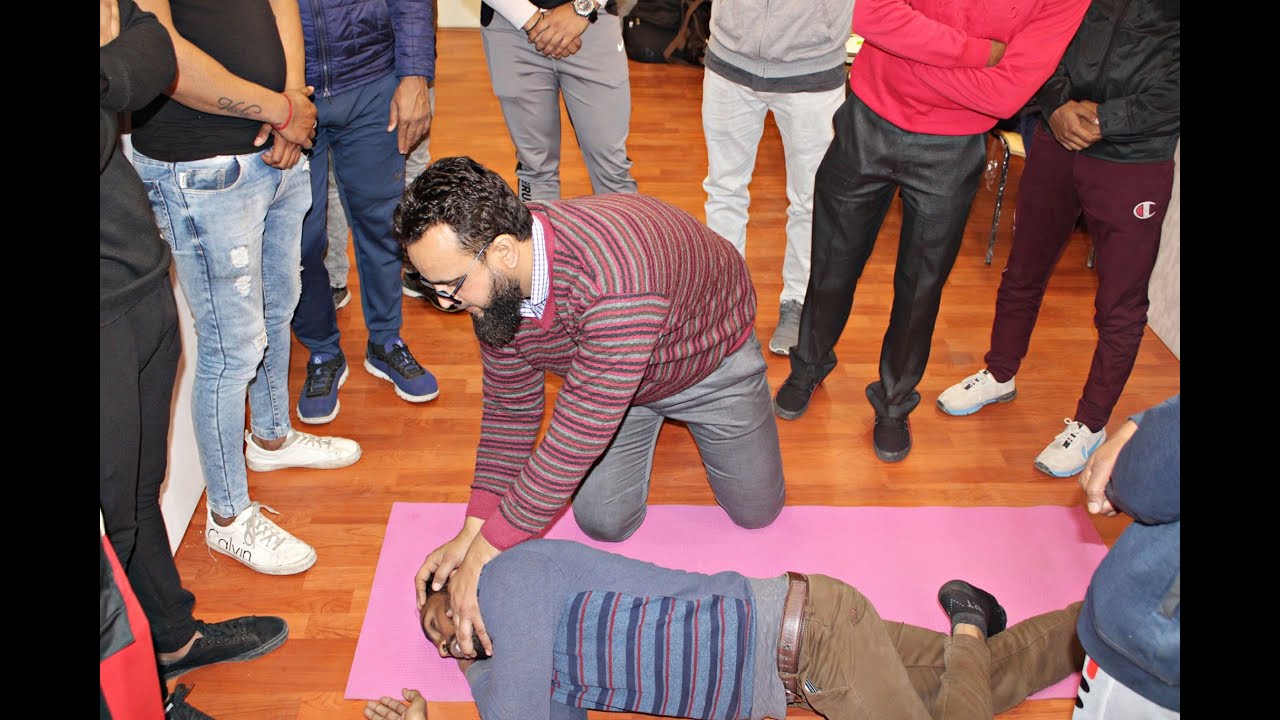
CPR Training in Delhi: Learn Skills That Can Save a Life
What Is CPR Training?
CPR means cardiopulmonary resuscitation. It is an emergency skill used when a person is not breathing normally or has no signs of life.
CPR Training teaches you how to:
- Recognise cardiac arrest.
- Check if a person responds.
- Call emergency services.
- Give good-quality chest compressions.
- Provide rescue breaths when trained to do so.
- Use an automated external defibrillator, or AED.
- Help adults, children, and infants.
- Respond to choking and other common emergencies.
The Indian Red Cross Society includes CPR, wound care, and emergency response in its first aid training programmes. Its standard first aid programme also covers wider emergency care skills, not just CPR.
CPR does not replace medical care. It gives a person a better chance of survival while you wait for trained medical teams.
Certified Institute
CPR Training Institute — New Delhi
Certified Cardiopulmonary Resuscitation courses designed for everyone — from corporate teams to families — taught by practicing medical doctors.
ImportanceWhy CPR Training Matters
When the heart stops, every minute matters. The brain and other organs need oxygen. Waiting for an ambulance without doing anything can waste valuable time.
Think of CPR as a bridge. It helps move oxygen through the body until professional help takes over. The quality of that bridge depends on how well you learned and practised the skill.
Many people say, “I know CPR from a video.” A video may help you understand the steps, but it does not show whether your hands are in the right place or whether your compressions are deep and steady. In-person practice gives you feedback. You work with a training manikin and learn what real pressure feels like.
The American Heart Association publishes evidence-based CPR and emergency care guidance, including updated adult, child, infant, and healthcare algorithms. A good CPR course should use current teaching material and trained instructors
Critical Facts About Cardiac Arrest
What Is CPR? Understanding the Basics
CPR (Cardiopulmonary Resuscitation) is an emergency life-saving technique performed when someone's heart has stopped beating or they have stopped breathing normally. It combines chest compressions and rescue breaths to maintain circulation and oxygenation until professional medical help arrives.
Modern CPR guidelines now also recognize Compression-Only CPR (Hands-Only CPR) as an effective alternative for untrained bystanders — making it even more accessible to the general public. Our training covers all approved techniques aligned with current American Heart Association (AHA) and WHO guidelines.
The CAB Framework of CPR
Compressions
Perform hard, fast chest compressions at 100–120 per minute to manually pump blood to the brain and vital organs.
Airway
Tilt the head back and lift the chin to open the airway and ensure it is clear of obstructions before giving breaths.
Breathing
Provide rescue breaths (mouth-to-mouth) to deliver oxygen to the lungs when the victim cannot breathe independently.
How to Perform CPR — Step-by-Step Overview
Our certified CPR course walks you through every step with hands-on practice. Here is a simplified overview of the adult CPR sequence:
Check for Safety & Responsiveness
Ensure the scene is safe. Tap the victim's shoulders firmly and shout, "Are you okay?" Look for normal breathing.
Call for Emergency Help — Dial 112
Call 112 immediately (India's emergency number) or direct a bystander to call while you begin CPR.
Begin Chest Compressions
Place the heel of your hand on the center of the chest. Push down at least 2 inches (5 cm) at 100–120 compressions per minute. Allow full chest recoil between compressions.
Open the Airway & Give Rescue Breaths
Tilt head, lift chin. Give 2 rescue breaths after every 30 compressions. Each breath should last about 1 second and visibly raise the chest.
Use an AED as Soon as Available
If an Automated External Defibrillator (AED) is available, turn it on and follow the audio prompts. Continue CPR until the AED is ready.
Continue Until Help Arrives
Do not stop unless the victim shows signs of life, a trained responder takes over, or you are physically unable to continue.
What You Learn in a CPR Course
How to spot cardiac arrest
You learn how to check for a response and normal breathing. A person who is unresponsive and not breathing normally needs urgent help.
You also learn how to protect yourself. Before helping, look around. Check for traffic, fire, electricity, broken glass, or other danger. Do not become the second victim.
How to give chest compressions
For adult CPR, the instructor shows you how to place your hands on the centre of the chest. You practise a steady compression rhythm and learn how to let the chest rise fully after each push.
Current CPR teaching commonly uses a compression rate of 100 to 120 compressions per minute. Your instructor will teach the correct depth and technique for adults, children, and infants because the method changes by age and size.
This is why hands-on training matters. Adult CPR is not the same as infant CPR.
How to use an AED
An AED checks the heart rhythm and may give an electric shock when needed. The device gives voice instructions, but you still need to know how to turn it on, place the pads, and follow the prompts.
Many people feel nervous around AEDs. In training, you practise each step until the process feels simple. You also learn to stand clear when the AED tells you not to touch the person.
Child and infant CPR
Parents, grandparents, teachers, babysitters, daycare workers, and domestic helpers can all benefit from child and infant CPR Training.
The course explains how to respond when a child or baby:
- Is not breathing normally.
- Chokes on food or a small object.
- Becomes unresponsive.
- Has a serious fall or injury.
Infant care needs gentle, age-appropriate methods. Never use adult techniques on a baby without proper instruction.
Choking response
A choking person may be unable to speak, cough, or breathe. CPR Training shows you how to respond based on the person’s age and condition.
You also learn what to do if the choking person becomes unresponsive. This is especially useful in homes, restaurants, schools, offices, and childcare centres.
CPR for Every Age Group
CPR technique varies significantly depending on the victim's age. Our certified training covers all three protocols with dedicated hands-on practice sessions.
Adult CPR
- Age 8 years and above
- 2-hand compressions, 5–6 cm depth
- 30:2 compression-to-breath ratio
- AED use and shock delivery
- Recovery position techniques
Child CPR
- Ages 1–8 years
- 1–2 hand compressions, ~5 cm depth
- 30:2 ratio (1 rescuer), 15:2 (2 rescuers)
- Pediatric AED pad use
- Child-specific airway management
Infant CPR
- Birth to 12 months
- 2-finger compressions, ~4 cm depth
- 30:2 ratio (1 rescuer), 15:2 (2 rescuers)
- Gentle rescue breathing technique
- Choking response for infants
CPR Training for Delhi Homes
Delhi homes are busy places. Families may include young children, older parents, grandparents, or people with health concerns. A medical emergency can happen during breakfast in Lajpat Nagar, at night in Saket, or while children are playing in Mayur Vihar.
At least one adult in the home should know CPR and first aid. If you have a baby, an elderly family member, or a family member with a known heart condition, training becomes even more useful.
A home-based course can work well for families. Everyone can learn together, ask questions, and practise without travelling across the city. A trainer may also help you think about your home emergency plan, such as:
- Who will call for help?
- Who will bring the first aid kit?
- Where is the nearest hospital?
- Can someone guide the ambulance to the correct building?
- Is there an AED nearby?
These small plans can reduce confusion when every second feels important.
CPR Training for Offices and Shops
Office owners in Nehru Place, Gurugram, Noida, Karol Bagh, and Okhla often focus on fire safety, security, and workplace rules. CPR should also be part of the safety plan.
A trained employee can respond while another person calls for emergency help. This is helpful in offices, factories, gyms, salons, coaching centres, restaurants, and retail stores.
For a workplace course, choose training that includes::
- CPR for adults.
- AED use.
- Choking response.
- Basic first aid.
- Practical skills testing.
- Emergency action planning.
- Certificates, if your organisation needs them.
- Refresher training.
On-site CPR Training is often the best option for offices. It saves travel time and lets the trainer use examples from your workplace. A team can also practise how to respond in a meeting room, shop floor, kitchen, lift area, or reception space.
How to Choose the Right Course
Not every course offers the same level of training. Before booking, ask a few simple questions.
Is the course practical?
You should spend time practising on manikins. A class that only shows slides may not build real confidence.
Are the instructors qualified?
Ask about the instructor’s CPR, first aid, or BLS background. The trainer should be able to explain adult, child, and infant techniques in clear language.
Does the course use current guidance?
CPR recommendations can change as new research becomes available. The American Heart Association’s 2025 guidelines are part of the current international update process, with regional education activity taking place in India as well.
Does the course match your needs?
A parent may need child and infant CPR. An office employee may need adult CPR and AED use. A nurse or doctor may need BLS, ACLS, or PALS training. Do not pay for a course that does not fit your role.
Is the certificate clear?
Ask who issues the certificate, how long it remains valid, and whether your employer or regulator accepts it. Certification rules vary by course and organisation, so confirm before booking.
Why Choose 24x7 Medical Service for CPR Training?
Doctor-Led Training
All courses conducted by practicing physicians and certified emergency medical professionals — not just instructors.
AHA & WHO Aligned
Curriculum follows the latest guidelines from the American Heart Association, WHO, and the Indian Red Cross Society.
Hands-On Practice
State-of-the-art CPR mannequins with real-time feedback, AED trainers, and realistic emergency scenario simulations.
Certified Since 2009
Delhi NCR's most trusted CPR training institute with over 10,000 professionals certified across 5+ states.
On-Site Corporate Training
We bring the full training setup to your workplace — zero disruption, maximum convenience for your team.
Internationally Valid Certificate
Receive a nationally and internationally recognized CPR certification accepted for compliance and employment.
A Trained Bystander Can Save a Life. Be That Person.
Join thousands of Delhi NCR professionals, parents, and healthcare workers who have earned their CPR certification with 24x7 Medical Service. Courses available 7 days a week, on-site or at our Delhi training centre.
Online or In-Person CPR Training?
Online lessons are useful for learning basic ideas. They can help you understand the steps before attending a practical session.
However, online learning alone may not be enough for people who need real skills. You cannot fully practise hand position, compression depth, rescue breathing, or AED use through a phone screen.
My view is simple: use online learning as preparation, but choose in-person training when possible. For offices, schools, gyms, and healthcare teams, practical training is the stronger choice.
What to Bring to CPR Training
Wear comfortable clothes that allow you to kneel and move your arms. Bring a notebook if you like to write down key points. You do not need medical knowledge to begin.
Most beginners worry that they will make a mistake. That is normal. A good instructor creates a safe space to practise, ask questions, and try again. The aim is not to make you perfect on the first attempt. The aim is to help you respond instead of standing still.
Build a Safer Community
CPR Training is useful for more than one person. When several people in a home, office, school, or neighbourhood know what to do, the whole group becomes safer.
A class in Janakpuri, Vasant Kunj, Shahdara, or Greater Kailash can prepare families and teams to act before an ambulance arrives. You may never need to use CPR. But if that day comes, the training can help you keep a clear head, call for help, and give meaningful care.
Choose a course with current guidance, skilled instructors, and real hands-on practice. CPR Training is not about becoming a doctor. It is about learning a few important actions that may help keep someone alive until professional care arrives.